Honest buyer note: Our garments are made by Bali workshops, so expect normal handmade colour variation and sizing tolerance — we work to an approved master sample and size chart. All FOB prices, MOQs and lead times are indicative ranges (2024–2025, FOB Bali) and final pricing is by quote; note the difference between per-style/colour minimums and total-order minimums. Rayon/viscose can shrink or lose colour if mishandled, so we advise wash-testing and proper care labelling. Fibre-content and care-label rules (US FTC, EU, Australia) and HS classification are general information, not legal advice — verify with your customs broker. We coordinate vetted Bali factories and buying-houses (full-package or CMT) and handle export; we respect your designs and IP.
Sourcing ethical fair labor apparel in Bali means partnering with manufacturers who uphold transparent standards for worker welfare, fair wages, safe working conditions, and environmental responsibility. For businesses seeking an ethical clothing manufacturer in Bali, understanding these principles is paramount to building a responsible and sustainable supply chain. This guide provides a practical overview of what to expect when engaging with Bali’s apparel sector for wholesale and OEM/private-label production, focusing on verifiable practices and essential trade considerations.
## Understanding Ethical Production in Bali’s Apparel Sector
The term “ethical production” in apparel extends beyond mere legal compliance; it signifies a commitment to social and environmental responsibility throughout the manufacturing process. In Bali, this translates to factories and workshops that prioritize the well-being of their employees, ensure safe working environments, and adhere to fair compensation practices. It also encompasses efforts towards reducing environmental impact, though this varies greatly among producers.
For brands, due diligence in Bali means looking beyond surface-level claims. It involves seeking transparency in operations, understanding local labor laws, and verifying working conditions. While Bali is renowned for its craftsmanship and creative spirit, the depth of a manufacturer’s ethical commitment requires direct inquiry and, ideally, site visits or third-party audits. As your B2B desk, we emphasize that genuine ethical sourcing is a continuous process of verification and partnership.
### What Constitutes Fair Labor in Bali?
Fair labor practices in Bali are anchored in Indonesian labor law, but truly ethical operations go further. Key components include:
* Fair Wages: Ensuring workers receive a living wage that covers basic needs and provides discretionary income, often exceeding the mandated minimum wage.
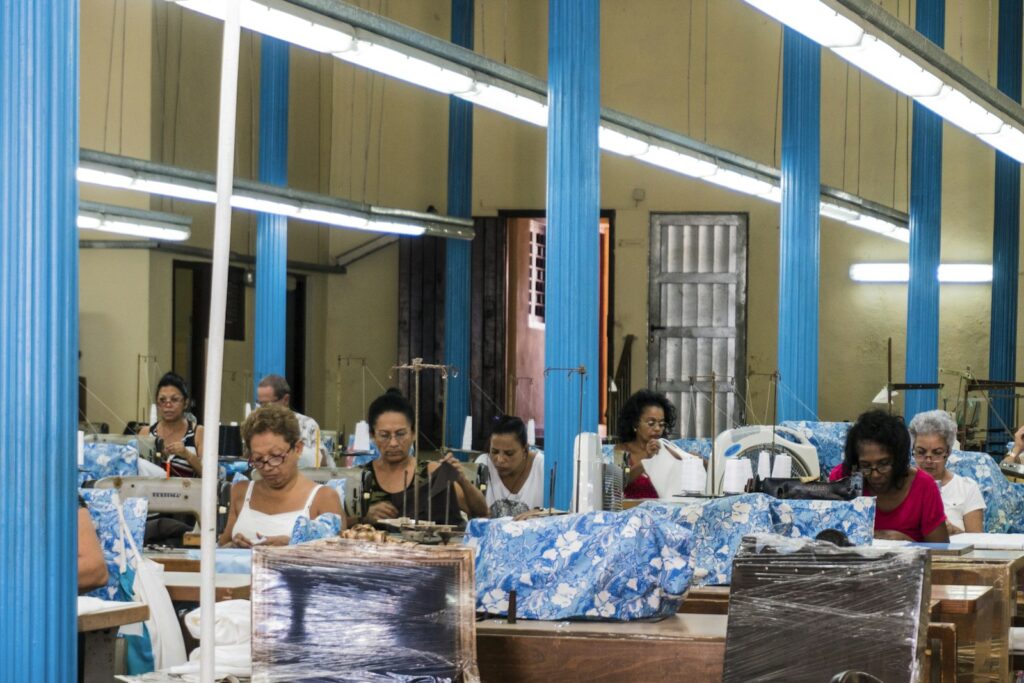
* Safe Working Conditions: Providing a clean, well-lit, and ventilated workspace, with appropriate safety equipment and emergency protocols. This includes fire safety, ergonomic considerations, and access to clean water and sanitation facilities.
* Reasonable Working Hours: Adhering to legal limits on working hours, including overtime regulations, and ensuring adequate rest periods. Forced labor is strictly prohibited.
* Non-Discrimination: Promoting an inclusive workplace free from discrimination based on gender, religion, age, disability, or any other personal characteristic.
* Freedom of Association: Respecting workers’ rights to form or join unions and engage in collective bargaining.
* No Child Labor: Strictly prohibiting the employment of individuals below the legal working age.
* Transparent Contracts: Ensuring clear, legally binding employment contracts that outline terms, conditions, and benefits.
When you engage in fair trade apparel sourcing in Bali, these are the benchmarks we encourage you to verify. Our network of verified producers is selected based on a demonstrated commitment to these standards, understanding that genuine ethical practice builds a more reliable and sustainable supply chain for everyone.
## Navigating Fabric Choices, Print Methods, and Production Capacities
Bali offers a diverse range of fabric options and printing techniques suitable for resort wear, kaftans, dresses, and linen garments. Understanding these options, their cost implications, and production requirements is crucial for effective sourcing.
### Common Fabrics and Their Characteristics
* Rayon (Viscose): A popular choice for resort wear due to its soft drape, breathability, and vibrant print absorption. It’s an excellent canvas for intricate designs. Buyers must be aware that rayon can be prone to shrinkage (up to 5-10%) and requires careful washing instructions (cold water, gentle cycle, air dry) to maintain garment integrity and colourfastness.
* Cotton: Offers durability, breathability, and comfort. Available in various weaves and weights, from lightweight voile for cover-ups to heavier twill for structured garments. Cotton tends to be more stable than rayon regarding shrinkage.
* Linen: Known for its natural texture, strength, and cooling properties, linen is ideal for high-quality resort wear. It wrinkles easily, which is often considered part of its charm. Blends of linen and rayon or cotton are also common, combining the best attributes of each fibre.
### Printing Techniques Available
* Digital Printing: Offers unlimited colour palettes, intricate detail, and photographic quality. It’s highly versatile for small to medium runs and complex designs. Costs are generally higher per metre than screen printing but can be more economical for smaller MOQs due to minimal setup costs.
* Screen Printing: Best for designs with fewer colours and larger production volumes. It offers excellent colour saturation and durability. Setup costs (for screens) are incurred per colour, making it more cost-effective for bulk orders.
* Hand Block Printing: A traditional craft, hand block printing offers a unique, artisanal aesthetic. It’s less precise than digital or screen printing, with inherent variations that contribute to its charm. Available through specialized network partners, not a universal offering.
* Batik: Another traditional Indonesian technique, batik involves applying wax to fabric before dyeing to create intricate patterns. Like hand block printing, it’s a specialized craft available through specific network partners, offering a truly unique, handcrafted product.
## Practical Considerations: FOB Ranges, MOQs, and Lead Times
Successful sourcing hinges on a clear understanding of pricing structures, minimum order quantities (MOQs), and production timelines. Our insights are grounded in current market realities, presenting indicative ranges to help you plan your budget and production schedule.
### Indicative Sourcing Facts (Last Verified June 2026)
The following figures provide a general guide for wholesale and OEM/private-label production in Bali. Prices are presented as ranges, reflecting variations based on fabric quality, complexity of design, print method, order volume, and specific manufacturer capabilities.
| Product Type | Fabric/Print Method | FOB Range (2024-2025 FOB Bali by-quote) | MOQ (per style/colourway) | Lead Time (Production) |
|---|---|---|---|---|
| Kaftans/Dresses (Basic) | Rayon (Digital Print) | USD $8.50 – $14.00 | 150-250 pieces | 35-50 days |
| Cover-Ups/Tunics | Cotton Voile (Screen Print) | USD $7.00 – $12.00 | 200-300 pieces | 40-55 days |
| Linen Trousers/Shirts | Linen/Linen Blend (Solid Dye) | USD $15.00 – $25.00 | 100-200 pieces | 45-60 days |
| Embellished Kaftans | Rayon (Digital Print + Hand Embellishment) | USD $18.00 – $30.00 | 100-150 pieces | 50-70 days |
Note on FOB Ranges: These figures are indicative and subject to change based on global raw material costs, currency fluctuations, and specific factory loading. Always request a direct quote for precise pricing.
### MOQ Traps to Avoid
Minimum Order Quantity (MOQ) is a critical factor. While Bali offers flexibility compared to larger manufacturing hubs, understanding MOQs is essential:
* Fabric MOQs: Mills often have higher MOQs for custom fabric orders or specific colours. If your garment MOQ is lower than the fabric MOQ, you might need to select from in-stock fabrics or pay a premium.
* Print MOQs: Digital printing offers lower MOQs per design, but screen printing requires higher volumes to amortize screen setup costs.
* Component MOQs: Zippers, buttons, labels, and specialized trims also have their own MOQs, which can influence overall garment MOQs.
* Combined Orders: Some factories may allow you to meet a total order quantity by combining multiple styles, but often with specific rules regarding colourways and sizes per style. Always clarify these terms upfront.
Working with an experienced sourcing partner helps navigate these complexities, ensuring you meet MOQs efficiently without over-committing your inventory.
## Quality Control and Common Challenges in Bali Production
Maintaining consistent quality is paramount for any brand. While Balinese craftsmanship is highly regarded, certain challenges are common and require proactive management.
### Rayon Shrinkage and Colourfastness
As mentioned, rayon is prone to shrinkage. It is crucial to:
* Pre-Shrink Fabric: Some manufacturers offer pre-shrinking, which can mitigate the issue significantly. Always inquire about this service.
* Care Label Accuracy: Ensure care labels correctly advise cold wash, gentle cycle, and air drying to minimize post-purchase shrinkage and maintain colour vibrancy.
* Colourfastness Testing: For dark or vibrant rayon prints, testing for colourfastness is advisable to prevent bleeding during washing.
### Sizing Variance
Achieving consistent sizing across production runs can be a challenge with any manufacturer, particularly with garments produced by multiple artisans or in smaller workshops.
* Detailed Tech Packs: Provide comprehensive tech packs with precise measurements for all key points of measurement (POMs) and acceptable tolerance levels (+/-).
* Grading Rules: Clearly define your grading rules for all sizes.
* Pre-Production Samples (PPS): Always approve a PPS before mass production.
* In-line and Final Inspections: Implement rigorous quality control checks throughout the production process and a final AQL (Acceptable Quality Limit) inspection before shipment.
* Tolerance Levels: Expect minor variances. Define your acceptable tolerance levels with your manufacturer. For example, a +/- 1-2cm variance on a seam might be acceptable, while more significant deviations are not.
### General Quality Control Measures
* Fabric Inspection: Check for flaws, colour consistency, and weight before cutting.
* Cutting Accuracy: Ensure patterns are cut precisely according to markers.
* Stitching Quality: Inspect for evenness, tension, and security of seams.
* Finishing: Verify that all threads are trimmed, hems are even, and any embellishments are securely attached.
For reliable quality management and ethical sourcing, we recommend engaging a local QC agent or working with a partner who has robust in-house QC protocols.
## Protecting Your Intellectual Property (IP)
When developing OEM or private-label designs, safeguarding your intellectual property is critical. While outright theft is rare with reputable partners, proactive measures are always prudent.
* Non-Disclosure Agreements (NDAs): Have a clear, legally binding NDA in place before sharing sensitive designs or concepts.
* Clear Design Ownership: Ensure your contracts explicitly state your ownership of all designs, patterns, and samples created for your brand.
* Limited Access: Control who has access to your design files and samples within the factory.
* Build Trust: A long-term, transparent relationship with an ethical clothing manufacturer in Bali is your best defense. Trust is built through consistent communication and mutual respect.
## Export and Compliance: What You Need to Know
Exporting garments from Bali involves adherence to international trade regulations, including HS classification, fibre content labeling, and care instructions.
### HS Classification
Harmonized System (HS) codes are international standards for classifying products. Correct HS classification is vital for accurate customs duties and taxes in your destination country (US, EU, Australia).
* General Information: We can provide general guidance on common HS codes for resort wear. For example, woven rayon dresses might fall under HS Code 6204.43.00 (Dresses, skirts, and divided skirts, of artificial fibres, woven).
* Your Responsibility: It is ultimately your responsibility as the importer to verify the correct HS code with your customs broker or relevant government agency in your destination country. Incorrect classification can lead to delays, penalties, or additional duties.
### Fibre Content and Care Labeling Requirements
Each major market (US, EU, Australia) has specific regulations for garment labeling. These typically include:
* Fibre Content: Must accurately state the percentage of each fibre used (e.g., 100% Rayon, 60% Cotton / 40% Linen).
* Country of Origin: “Made in Indonesia” or “Product of Indonesia.”
* Care Instructions: Clear symbols or text outlining washing, drying, ironing, and bleaching instructions.
* Importer Identification: Your company name and address (or registered identification number).
US Requirements: Governed by the Federal Trade Commission (FTC). Requires specific disclosures on fibre content, country of origin, and care instructions.
EU Requirements: Managed by national regulations, but generally require fibre content, country of origin, and care instructions. The “OEKO-TEX” standard is often referenced for textile safety.
Australia Requirements: Similar to US/EU, requiring fibre content, country of origin, and care instructions.
Crucial Note: The information provided here is general guidance. You *must* consult with your customs broker or a legal professional specializing in textile import regulations for your specific target market to ensure full compliance. This step is non-negotiable to avoid customs issues.
### Freight and Export Logistics
Shipping from Bali (via Ngurah Rai International Airport, DPS, or Benoa Port) requires careful planning.
* Air Freight: Faster, more expensive. Suitable for urgent orders or smaller volumes. Transit times typically 3-7 days.
* Sea Freight: Slower, more economical. Ideal for larger volumes and non-urgent shipments. Transit times can range from 2-6 weeks depending on the destination.
* Freight Forwarders: We work with reputable freight forwarders who can handle customs clearance and delivery to your destination. They can advise on Incoterms (e.g., FOB, EXW, CIF) and provide detailed shipping quotes.
## Your Ethical Sourcing Checklist for Bali
To ensure a robust and responsible sourcing strategy, consider these steps:
1. Define Your Ethical Standards: Clearly outline what “ethical” means for your brand (e.g., specific certifications, wage benchmarks, environmental targets).
2. Research and Vet Manufacturers: Look for producers with a proven track record, positive references, and transparent operations.
3. Conduct Due Diligence: Request documentation, certifications, and, if possible, arrange for independent audits or site visits to verify working conditions and practices.
4. Communicate Clearly: Establish open lines of communication regarding your expectations for quality, ethical standards, and timelines.
5. Start with Samples: Always approve pre-production samples to ensure design, fit, and quality meet your specifications.
6. Implement Robust QC: Plan for in-line and final inspections to catch any issues early.
7. Understand Compliance: Work with a customs broker to ensure all labeling, HS classification, and import regulations are met for your target markets.
8. Build Relationships: Foster long-term partnerships based on trust and mutual respect.
## Frequently Asked Questions
### Q? How can I verify a manufacturer’s ethical claims in Bali?
A. Verifying ethical claims requires due diligence. Start by requesting their policies on worker welfare, wages, and environmental practices. Ask for references or testimonials. Ideally, arrange for a factory visit or engage a third-party audit firm specializing in social compliance. Transparency in their operations and willingness to share information are strong indicators of genuine ethical commitment. As your sourcing partner, we pre-vet our network for these commitments.
### Q? What are typical payment terms for wholesale orders in Bali?
A. Standard payment terms usually involve an upfront deposit (e.g., 30-50%) to commence production, with the remaining balance due upon completion and before shipment. For initial orders, a higher deposit might be requested. For long-term partnerships, more flexible terms may be negotiated. Always ensure payment terms are clearly outlined in your purchase order and contract.
### Q? Can Bali Resort Wear Wholesale help with custom designs and private labeling?
A. Absolutely. We specialize in OEM and private-label production. You can provide your own designs, tech packs, and branding elements, and we will connect you with manufacturers in our network who can bring your vision to life. This includes custom fabric sourcing, print development, and personalized labeling to ensure your brand identity is maintained. Our team assists with sampling, production oversight, and quality control for your unique products.
### Q? What should I know about shipping garments from Bali to my country?
A. Shipping involves several factors: cost, speed, and volume. Air freight is faster but more expensive, suitable for smaller, urgent orders. Sea freight is more economical for larger volumes but takes longer. You’ll need to work with a reputable freight forwarder who can manage logistics, customs clearance, and delivery to your final destination. It’s crucial to understand Incoterms (like FOB or EXW) to clarify who is responsible for costs and risks at each stage of the journey. We can connect you with trusted freight partners.
### Q? Are there any specific cultural considerations when working with manufacturers in Bali?
A. Building strong relationships based on respect and clear communication is key. Balinese culture values politeness, patience, and indirect communication. Be clear and direct in your requirements but always maintain a respectful tone. Understanding that certain holidays (like Nyepi) will impact production schedules is also important. A local partner or agent can bridge cultural gaps and facilitate smoother communication.
Partnering with an ethical clothing manufacturer in Bali is a strategic decision that aligns your brand with responsible practices while tapping into exceptional craftsmanship. By understanding the nuances of ethical production, practical sourcing considerations, and compliance requirements, you can build a sustainable and successful supply chain.
Contact us today to discuss your wholesale or OEM/private-label needs and receive our latest linesheet. Our team is ready to assist you in complexities of ethical fair labor apparel sourcing in Bali, ensuring transparency and quality every step of the way.